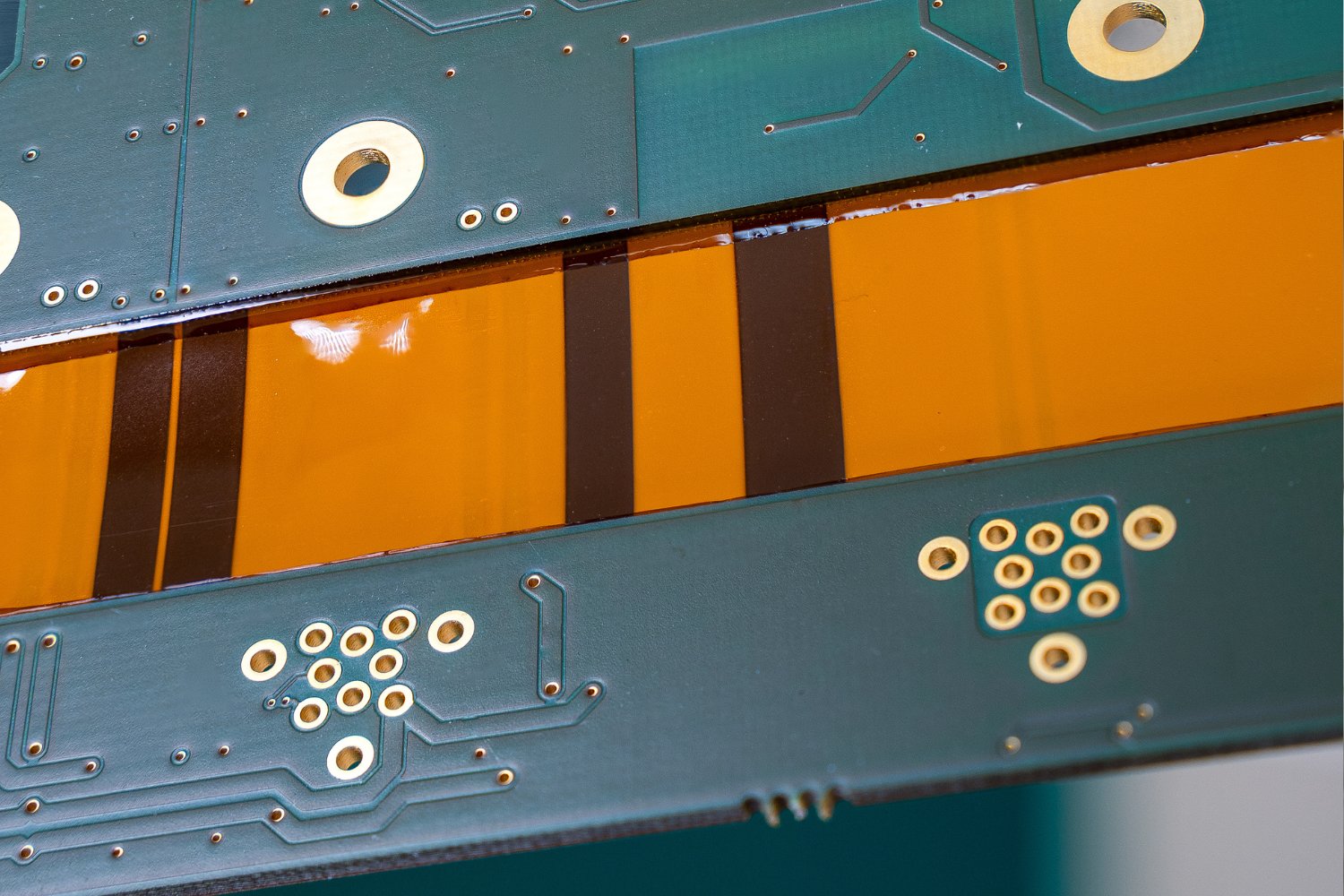
The "chemical tin" soldering surface offers a planar surface and good solderability for fine-pitch components. We explain the most important properties of the solder surface.
Industry accounts for around 31 percent of annual energy consumption in Germany. If the energy transition is to succeed, companies must accept their responsibility:
KSG has mastered the peak phase of the pandemic with entrepreneurial skill & customer service. The team provides an insight into how this was achieved.
ENAL = Use of nano-coated tools in PCB production Approximately ten percent of the manufacturing costs of a PCB are caused by the mechanical production processes, drilling
Design rules for high-current conductor tracks These rules must be observed when designing HSMtec PCBs: Standard values for HSMtec PCBs are 0.8 to 3.2 mm
When designing HSMtec PCBs with integrated copper elements, we generally recommend designing the high-current conductors before the standard layout. The development process of an HSMtec PCB
Iceberg®: uniform surface level over the entire conductor pattern Iceberg® PCBs are partial thick copper PCBs. In a wiring level, there are areas with 50 to
Thick copper, Iceberg® and HSMtec® are three different technologies for high-current printed circuit boards. The article compares the three technologies and explains the